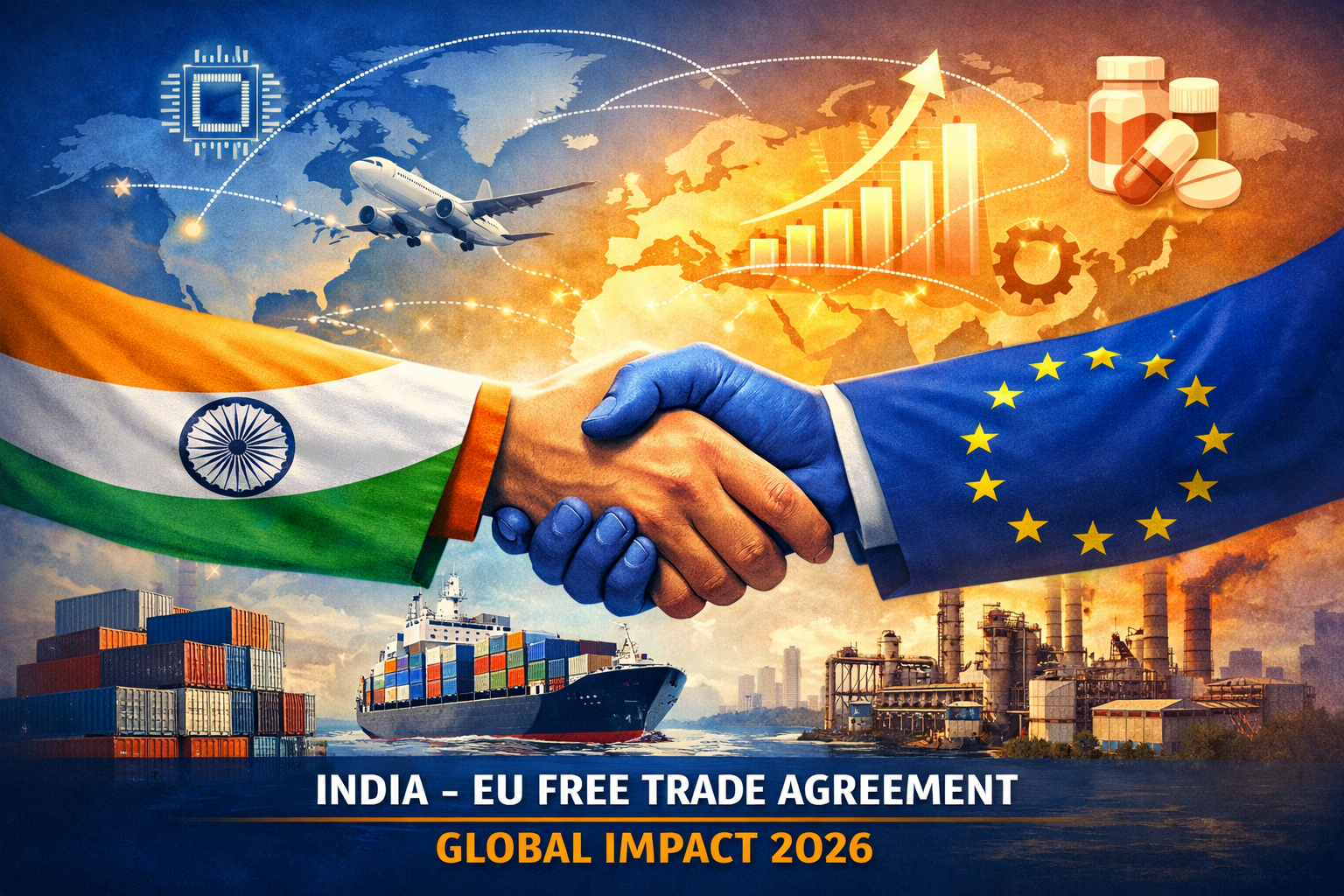
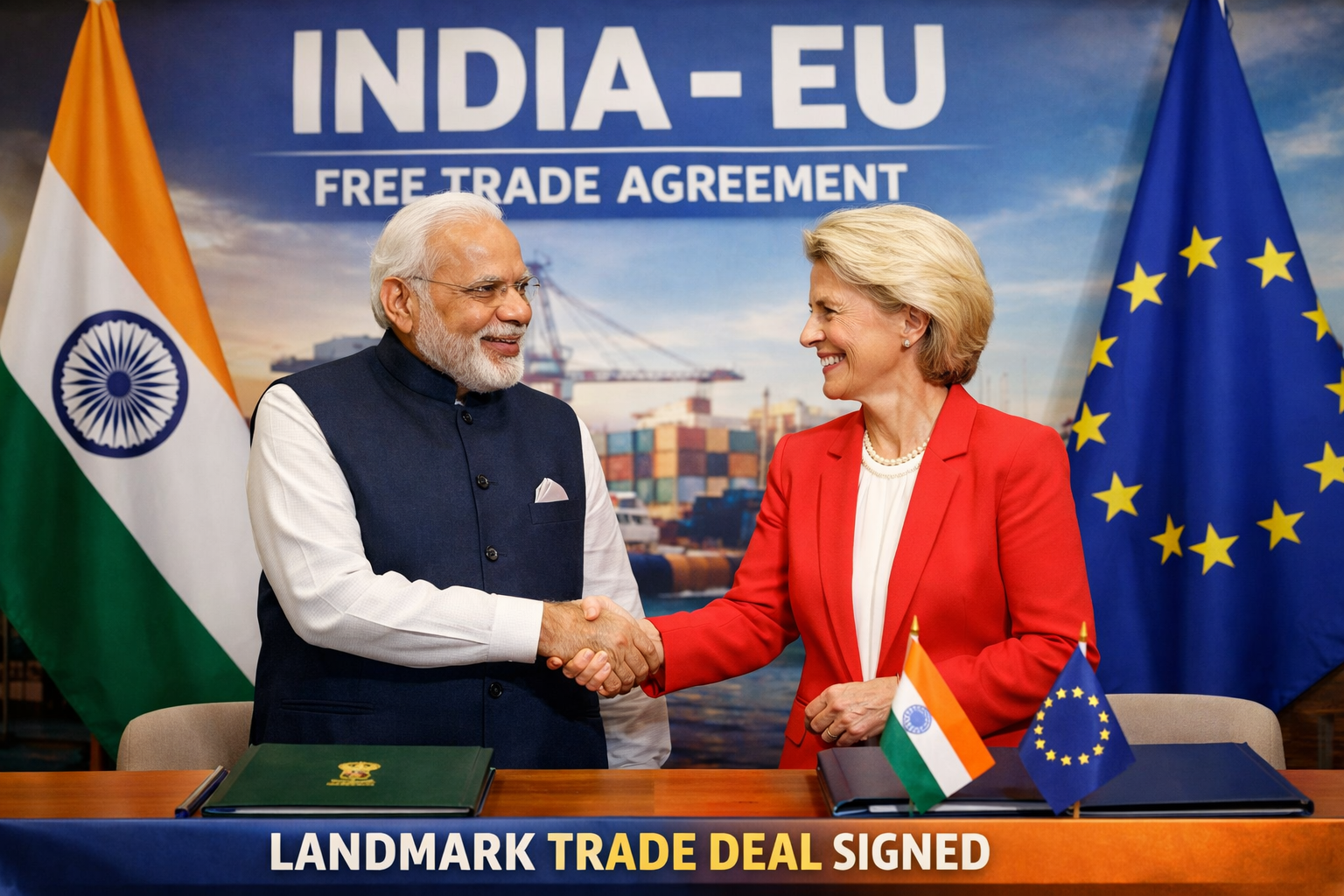

In a major development for global trade, India and the European Union have officially concluded negotiations on a landmark Free Trade Agreement (FTA) after years of talks, signalling deeper economic ties between two of the world’s fastest-growing markets. The announcement, made at the India-EU Summit on January 27, 2026, was hailed by both leaders as a transformative step that could reshape trade flows and global economic cooperation.
The pact is expected to reduce tariffs on a wide range of goods, including automobiles, agricultural products, and industrial machinery, opening up lucrative markets on both sides. For India, enhanced access to European markets could boost exports of textiles, pharmaceuticals, and IT services. Conversely, European producers stand to gain from expanded access to India’s rapidly growing consumer base.
Prime Minister Narendra Modi described the deal as the “mother of all trade pacts,” emphasising its potential to generate jobs, attract foreign investment, and support economic growth. EU leaders also emphasised the strategic importance of cooperation amid global uncertainties such as shifting geopolitical tensions and supply-chain disruptions.
Analysts suggest the FTA could serve as a catalyst for economic modernisation in India and strengthen diplomatic ties with the EU, positioning both parties as pivotal actors in global trade dynamics for the coming decade.