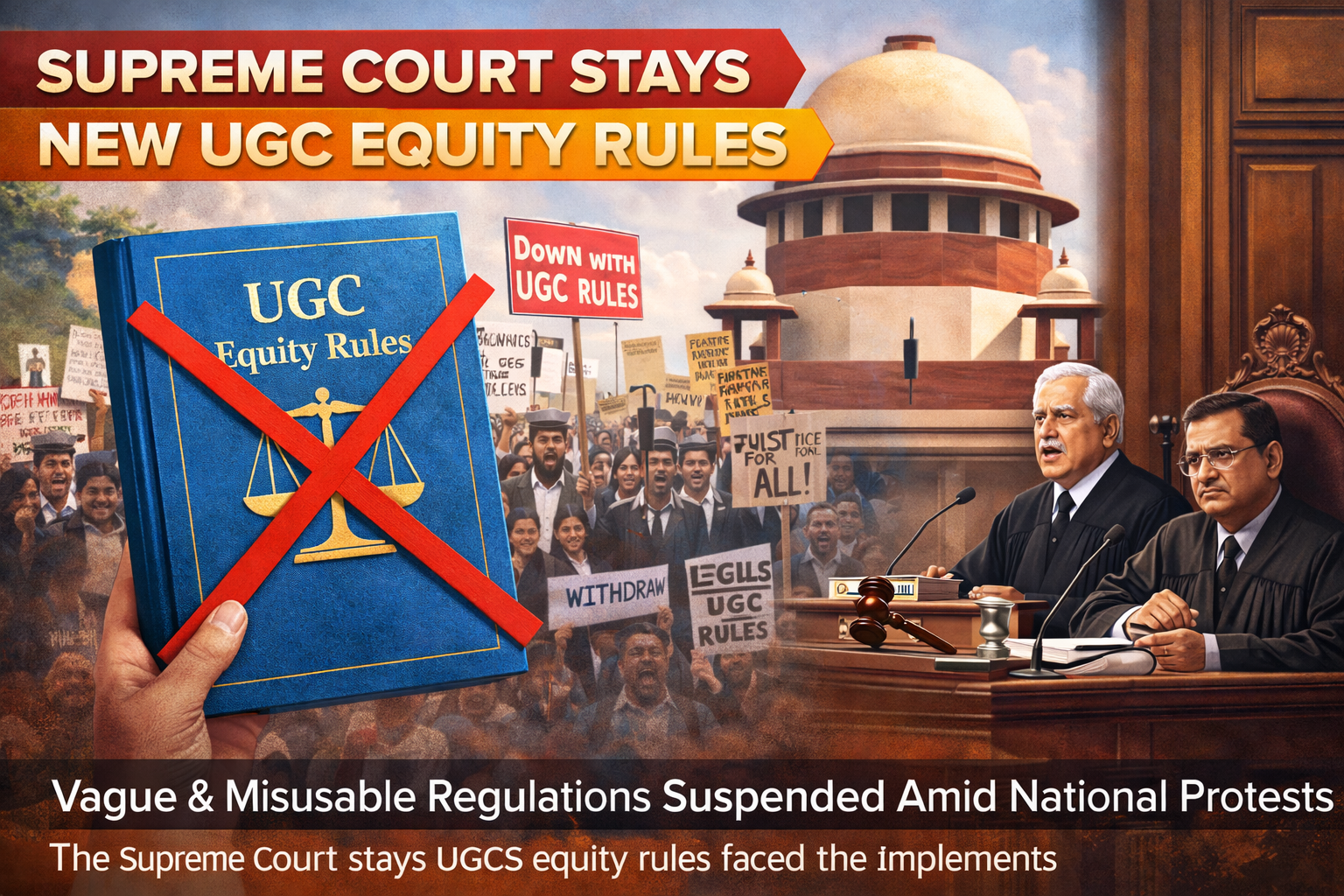
The Supreme Court of India has put a temporary halt on the implementation of the University Grants Commission’s (UGC) 2026 Equity Regulations, following widespread protests and multiple petitions filed across the country. The new rules were introduced to promote equality and prevent caste-based discrimination in higher education institutions, but they quickly became controversial.
During the hearing, the Supreme Court observed that several provisions of the regulations were “vague and capable of misuse”, and warned that they could lead to social division if implemented without clear safeguards. The court stated that while the objective of preventing discrimination is important, the rules must be precise, transparent, and constitutionally sound.
The UGC regulations required universities and colleges to establish Equal Opportunity Centres, grievance redressal mechanisms, and mandatory reporting systems for discrimination complaints. However, critics argued that the rules lacked clear definitions, could be misinterpreted, and might be used for false complaints or political targeting.
Following the announcement of the rules, protests erupted in several cities, including Delhi, Lucknow, Prayagraj, and Patna, with students, lawyers, and community groups demanding their withdrawal. Many education experts also expressed concerns over administrative burden and legal ambiguity.
The Supreme Court has now asked the UGC to submit a detailed response and clarification. Until further orders, the regulations will remain suspended, bringing temporary relief to universities and students across India.